
Origins: Diabase
A Climbers’ Guide to Deep Time
Imagine standing on the rim of an escarpment overlooking a valley that stretches from horizon to horizon. Across the valley the ground slopes steadily up and away, while behind rise peaks and mesas veiled by monsoon clouds. Torrents of storm water and sediment wash down from these highlands. Heaps of broken rock and layers of mud, sand, and pebbles spread out across the basin below. From time to time, the low rumble of an earthquake echoes across the flatland, as the weight of accumulating sediments flexes deep bedrock to the point of breaking. This process has been going on for millions of years.
Looking closer at the valley floor, ribbons of steam rise up from scattered hot springs, and a fringe of green marshland surrounds a corridor of meandering river channels and shallow lakes. Within these wetlands, primitive fish, gigantic toothy amphibians, armor-plated reptiles, and small, agile dinosaurs thrive. It's two hundred million years ago, on the cusp of the Triassic and Jurassic geologic periods, and we're standing at the edge of a crack in the earth along which the supercontinent Pangaea is slowly being torn apart. In today's terms, we're looking southeast from the current location of Hershey, Pennsylvania.
Now, let’s dive down the steep fault line and follow it underground. At about four miles below the surface of the floodplain we reach the future level of Hersheypark Drive. Another four or five miles below that lie the oldest layers of the sediments that have been washing in from the neighboring highlands. Thirty to fifty miles deeper still, under conditions of intense heat and pressure, blobs of viscous, molten rock are rising up from earth's mantle. Some of this magma, rich in iron, calcium, and magnesium, makes it to the surface to form volcanoes and lava flows. Larger volumes of magma, however, remain trapped below the surface, filling cracks and intruding between flat layers of sedimentary rock. As these magma bodies slowly cool and harden, their elemental ingredients combine to form interlocking mineral crystals of light-colored feldspar and dark-colored pyroxene. When fully solidified, the dense gray rock is called diabase.
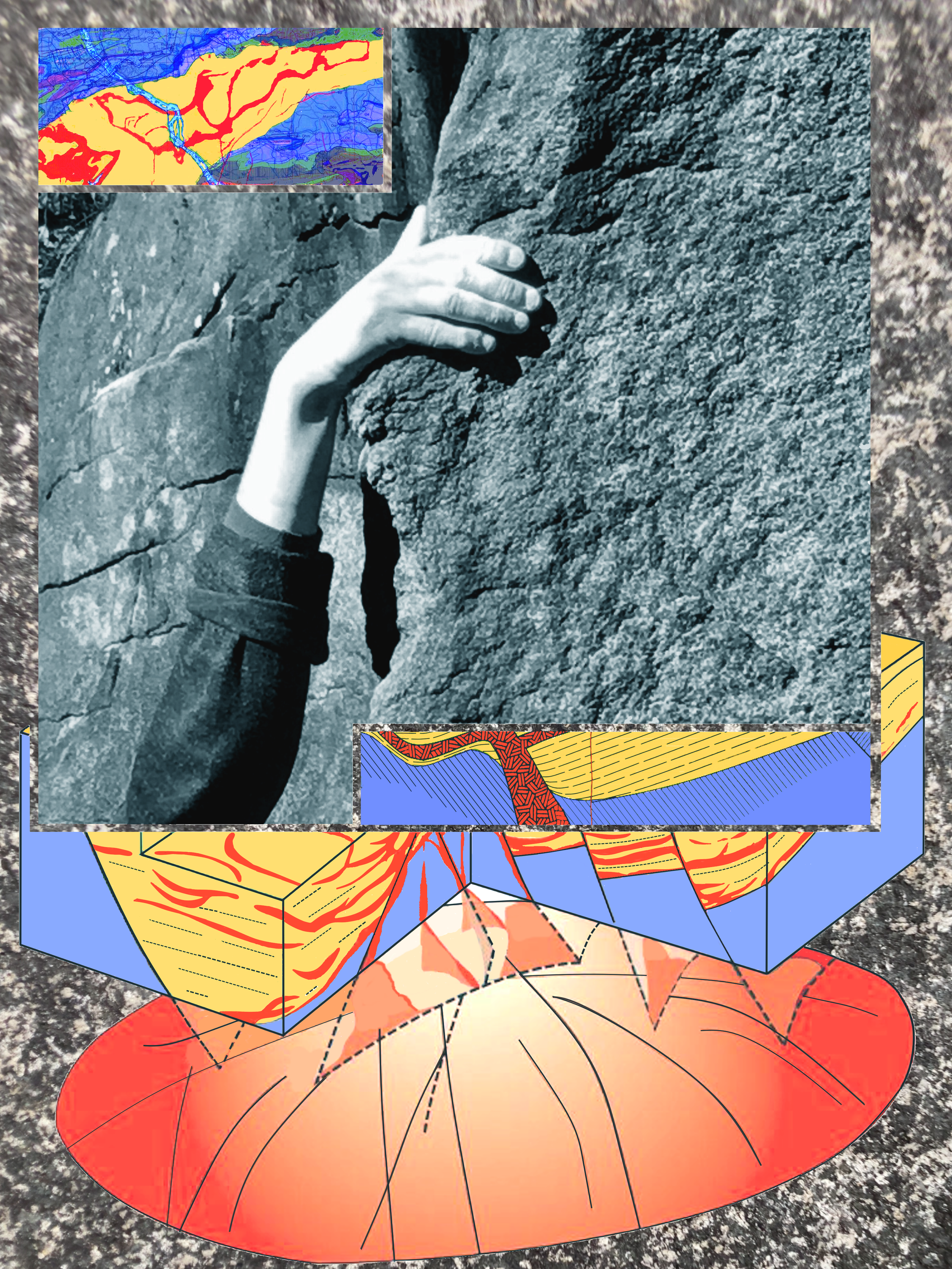
During the two-hundred million years since this dynamic landscape existed, a lot has happened. The sun and its family of planets made one full rotation around the Milky Way galaxy. Pangaea continued to fall apart as a larger, more active volcanic rift valley to the east was flooded by seawater, creating the Atlantic Ocean. Most of the prehistoric creatures living in the floodplain went extinct—except for the dinosaurs, who went on to greater things for a while. The Pangaean mountains and valleys were then worn down flat by erosion, uplifted, and then etched away again, several times. This process of uplift and erosion continues to the present day. The thick sheets of diabase that solidified miles underground had their tilted edges exposed at the surface. Erosion has left them to form higher ground, rising above lowlands composed of the ancient rift basin's softer red sandstones and shales.
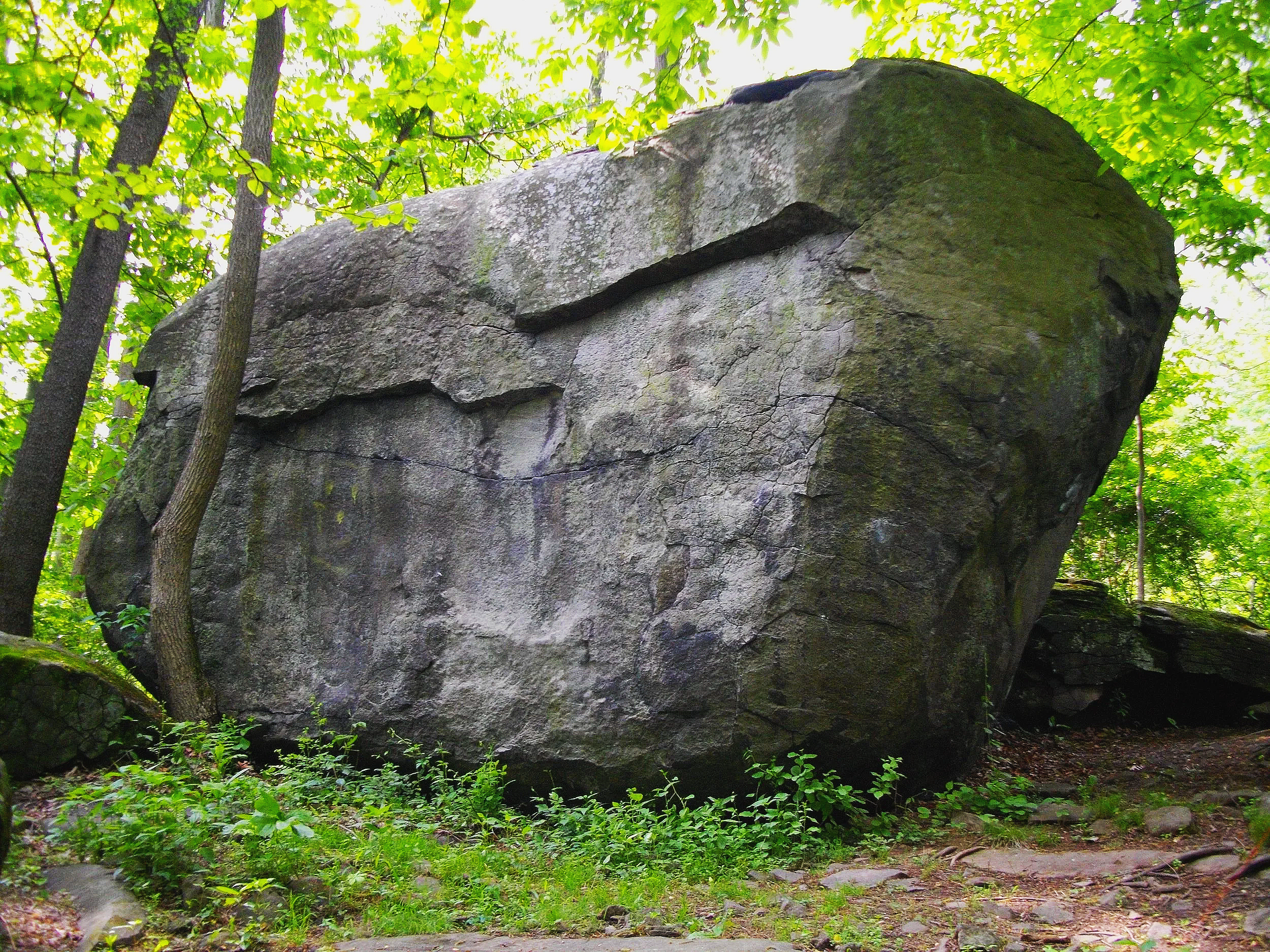
Finally, in the last three million years, under just the right conditions, this dense, high-friction igneous rock was shattered by freeze/thaw cycles during multiple ice ages—creating the diabase boulders perfectly made for climbing that we enjoy today at Governor Stable, Mount Gretna, and Haycock Mountain, along with the sport climbing walls of Birdsboro Quarry and the diabase-adjacent sandstone crags at Ralph Stover State Park, which were baked and hardened by nearby diabase intrusions.