
Origins: Sandstone & Quartzite
A Climbers’ Guide to Deep Time
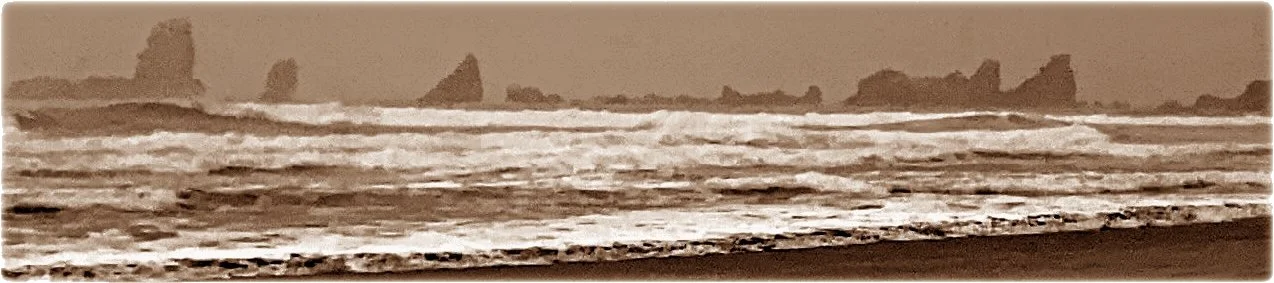
Earth was a hot, hazy, desolate world 540 million years ago. The air was heavy with an acrid blend of water vapor, carbon dioxide, volcanic fumes, and only sixty percent of the oxygen we breathe today. A thin ozone layer did little to prevent the sun's UV rays from searing the planet's rocky continents. One of the oldest of these landmasses was Laurentia, a raft of stone built up from lava, granite, and metamorphic rock that forms the core of North America.
Laurentia was drifting more-or-less uneventfully on the dense mineral sludge of the Earth's mantle. But then the hot rock under Laurentia began to cool and pull down on the continent. The landmass slowly began to sink under its own weight, and rising seas lapped onto its shores. If you could tolerate the harsh conditions long enough to stand at the water's edge, it would take thousands of years to even notice the ocean’s gradual transgression over the land, one high-tide at a time. Storms and currents pulverized the rocks along the coast, redepositing them in mosaics of sand dunes, beaches, tidal flats, shoals, and barrier islands.
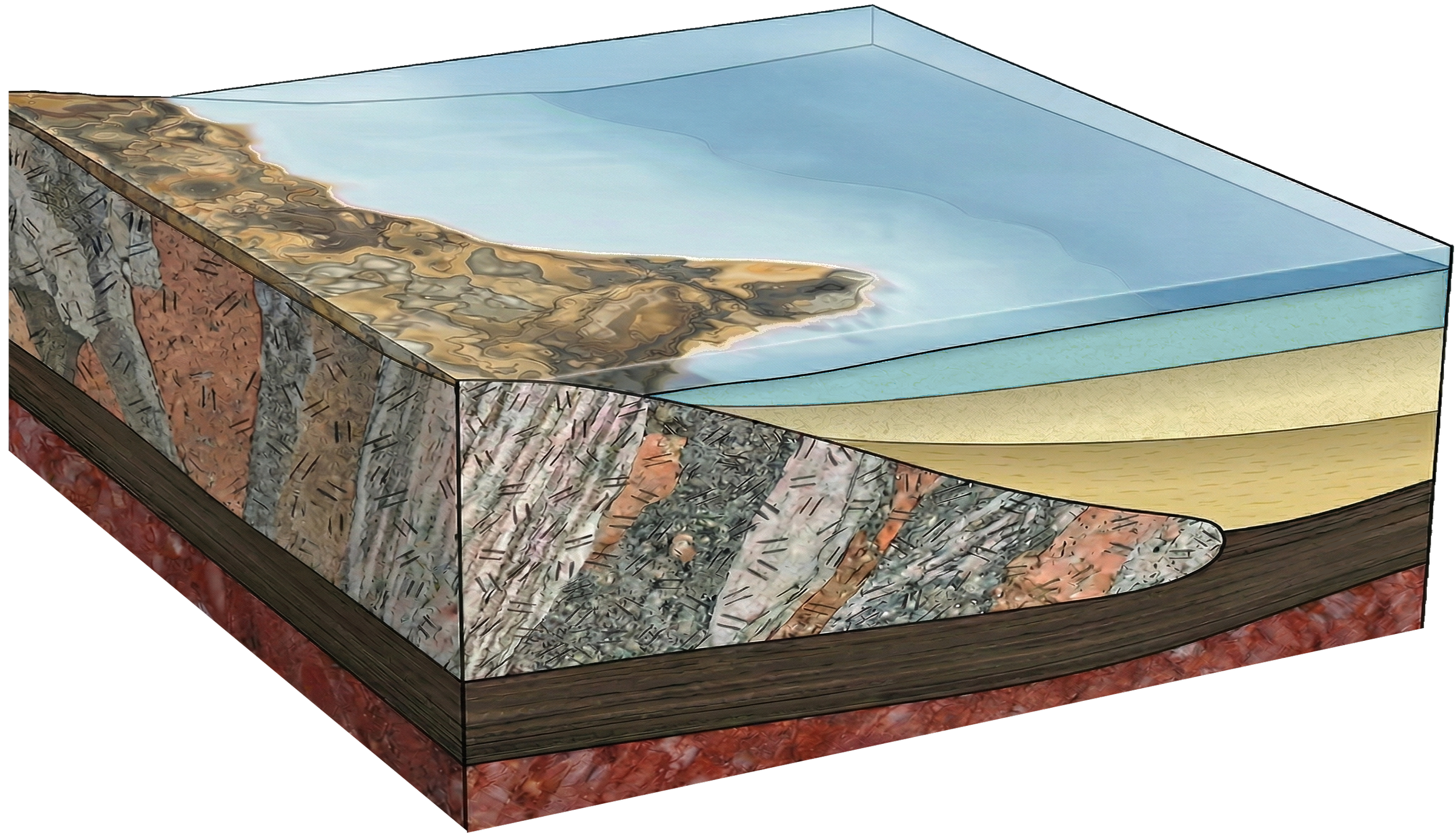
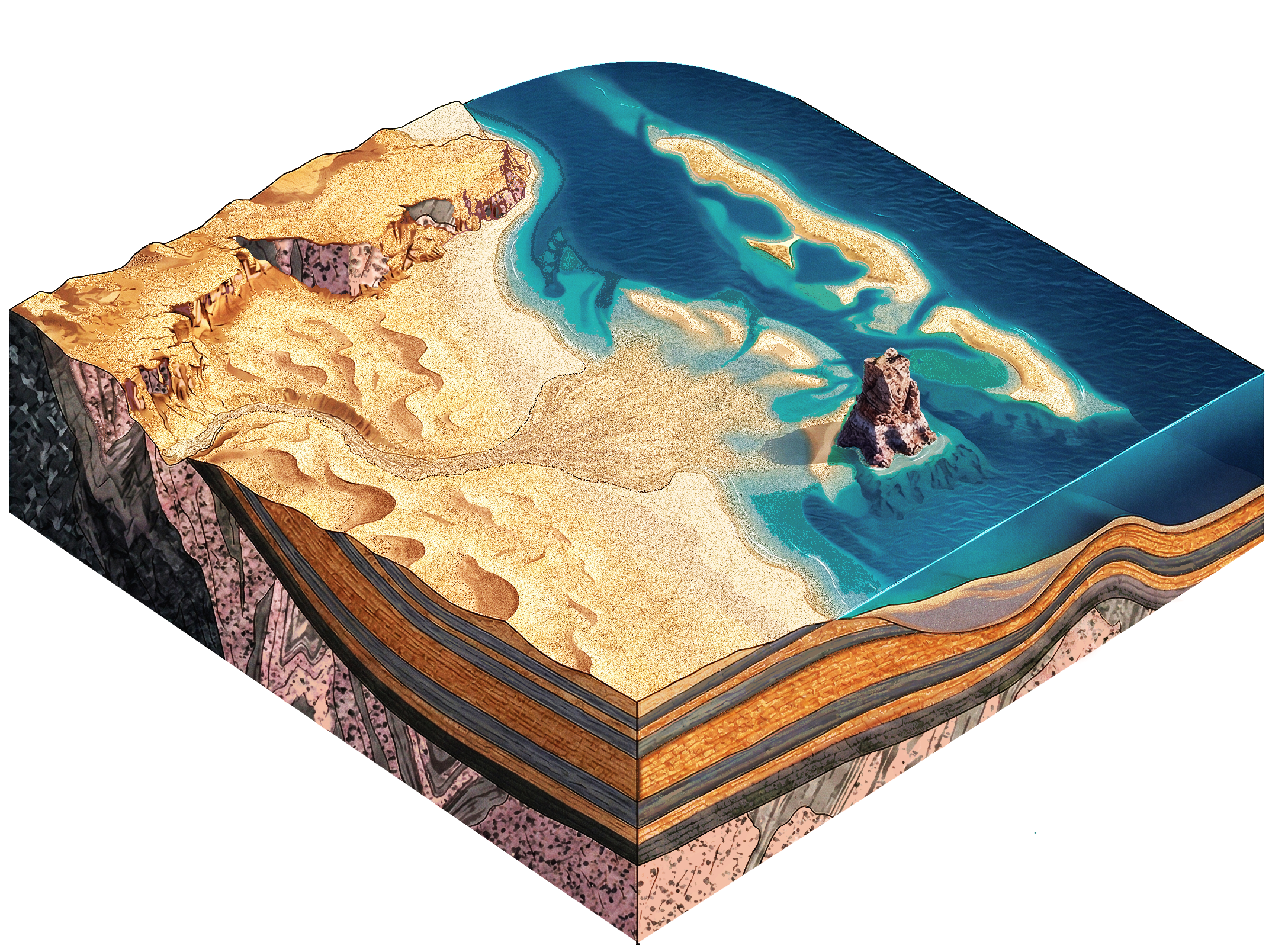
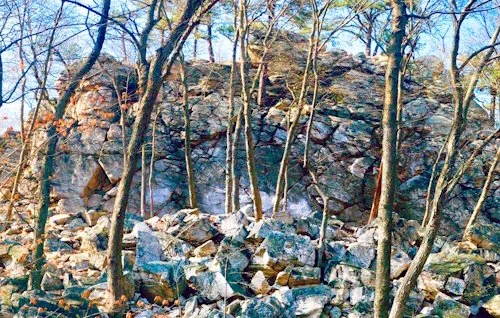
These former shorelines are preserved today at many popular climbing areas in south-central Pennsylvania and surrounding regions. The boulders of Whiskey Springs and the cliff faces of Chickies Rock, Susquehanna Riverlands, White Rock Acres, and Michaux State Forest all represent various phases of this transitional landscape, as do Sugarloaf Mountain and Annapolis Rock in Maryland, and Linville Gorge and Moore's Wall in North Carolina. These scattered crags were originally laid down in a blanket of sand up to 5,000 feet thick that formed around the edges of Laurentia. In the American West, remains of this encircling shoreline are preserved in rocks from the Wasatch Mountains to the Grand Canyon.
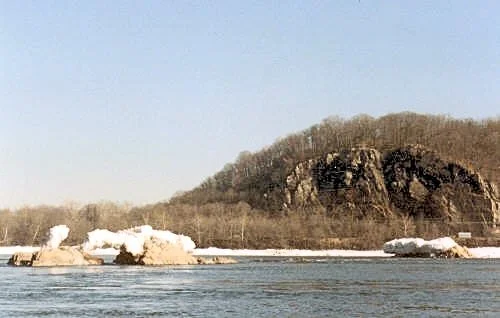
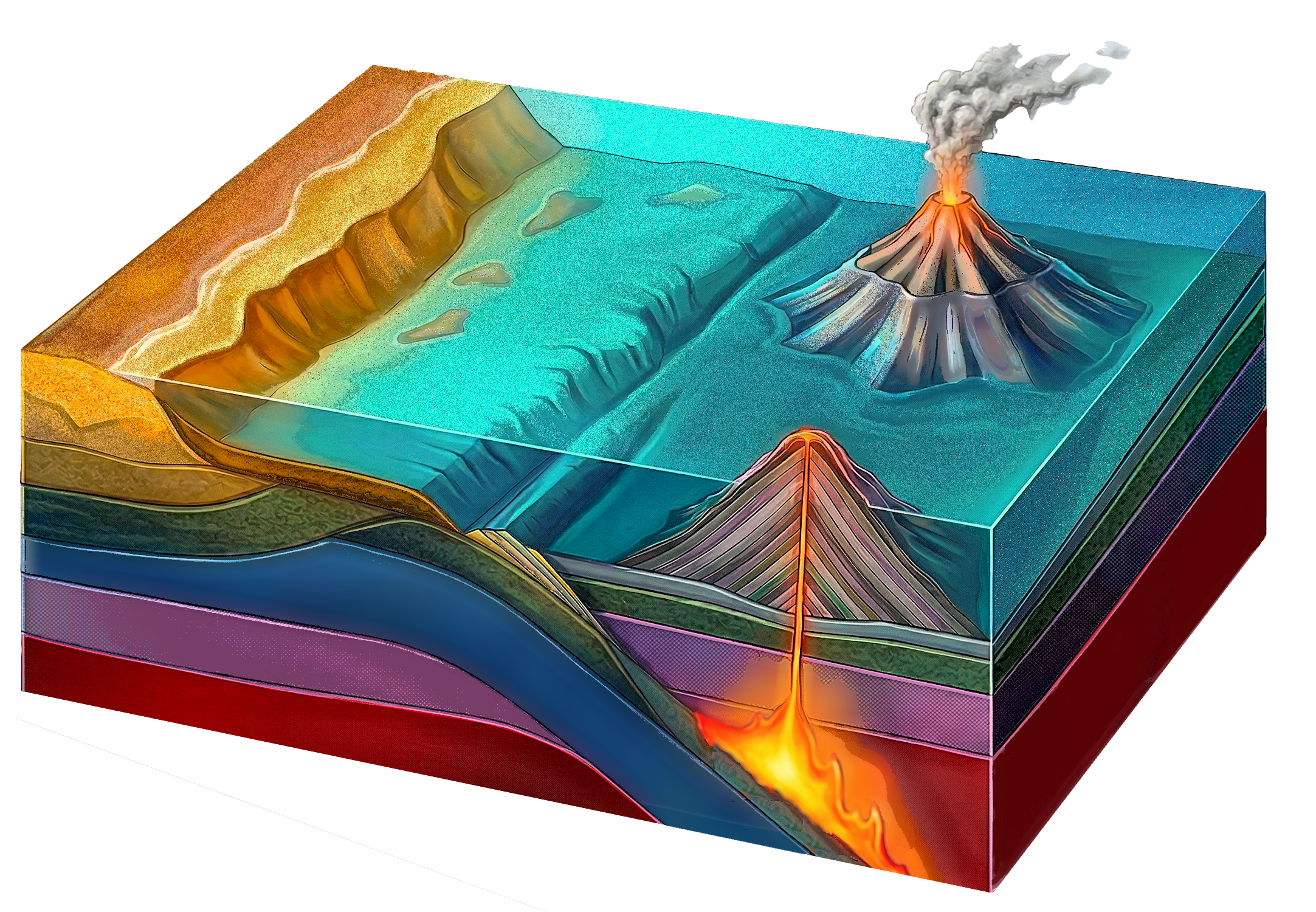
For 40 million years, sea-level rose until only a fraction of Laurentia remained above water. Under balmy tropical conditions that fostered an explosion of marine life, five to ten thousand feet of shale and limestone settled over the submerged beach sands, beginning their slow compression into sandstone.
Then, like a cork bobbing in a cup of syrup, Laurentia began to rebound, and seawater spilled off the edges of the continent for another 40 million years. With its fresh limestone topcoat exposed to wind and rain, Laurentia began to feel the effects of tectonic activity miles underground and hundreds of miles out to sea, as a chain of volcanic islands loomed on the horizon.
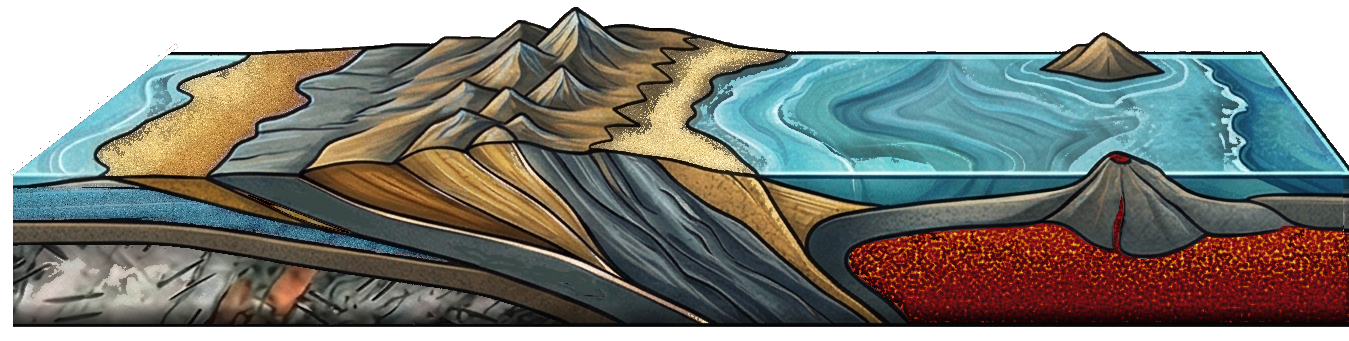
Creeping westward at the leading edge of a mobile oceanic plate, these islands gradually closed in on Laurentia over a span of about 20 million years. One-by-one, they plowed into the uplifted edge of the continent. The staggered impacts pushed up a long, narrow belt of alpine-scale mountains, composed of all the rocks mentioned so far. Lavas, limestones, shales, sandstones, and older underlying rocks, along with intervening fragments of continental crust and ocean floor, were folded, broken, and slid over top of one another. The energy and friction of the collision put intense pressure and heat to the most deeply buried rocks, turning primal sandstones into glassy metamorphic quartzite. Simultaneously, the enormous weight of the new mountains pressed down the continental crust, allowing seawater to flood the interior of Laurentia once again.
Rinse and repeat. Erosion immediately attacked the rising mountains, breaking their crumpled rock layers into boulders, cobbles, gravel, sand, silt, and clay. These sediments washed into the western sea, forming a new expanse of coastal plains and beachfront that were again submerged and buried under thick layers of limestone. Today, the remains of these recycled seashores form the highest ridges of the central Appalachians and offer climbing opportunities at Seneca Rock, West Virginia; the Delaware Water Gap; and New York's Shawangunk Ridge.
Another 40 million years of relative peace and quiet passed until a second wandering landmass—a micro-continent called Avalonia—approached Laurentia in the area of New England and eastern Canada. Prior to this tectonic collision, the restless Laurentian bedrock warped upward again. A third generation of sands eroded onto west-facing shores that can be visited today at the bouldering destination of Hunters Rocks, the walls of Donation Rocks, and other outcrops along Warrior Ridge and in Rothrock State Forest. Although they were deposited along the same strand of coastline, the pocketed gritstone at Hunters formed from deposits laid down along a wave-washed beach, while the rocks at Donation had their origins further offshore in deeper, less turbulent waters, where finer sands settled quietly and were compacted more uniformly.
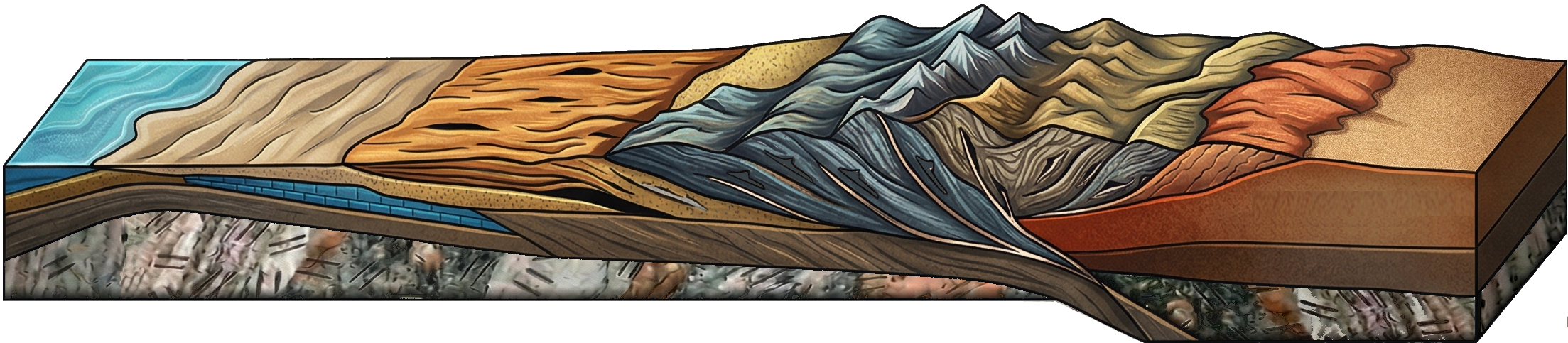
The last episode of mountain building came 325 million years ago when Gondwana, a gigantic landmass composed of Africa, South America, Antarctica, Australia, and India, approached from the east. The ensuing collision assembled the most recent global supercontinent, Pangaea. All of the earlier land- and seascapes were squeezed and folded up and over one another to raise the Central Pangaean Mountains, a great range that rivaled or surpassed the scale of today's Himalayas. As the mountains grew, their deeply buried layers were thrust to the surface, eroded, and repurposed yet again. Rivers draining the highlands' western slopes laid down a shifting series of coastal sands that are preserved today at the climbing areas of McConnell's Mill and Ohiopyle state parks, Bilger's Rocks, and Boxcar Rocks in Pennsylvania, as well as at Cooper's Rock and the New River Gorge, WV; Kentucky's Red River Gorge; Tennessee's Stone Fort, Obed River and T-Wall; and Alabama’s Horse Pens 40 bouldering area.
Pangaea lasted for a little over a hundred million years until its individual members broke apart and went their separate ways. Since then, erosion has stripped away nearly five miles of overlying rock to expose the far-flung family of Appalachian sandstone and quartzite crags on which we test our physical and psychological grit. Their blocky ledges, horizontal cracks, and overhanging roofs are relics of subtle changes in the layering of ancient beach sands, while lines of vertical cracks, aretes, and dihedrals resulted from the crustal movements that fractured the solidified rocks.
Meanwhile, suspiciously large piles of sand are gathering along the Atlantic shoreline, and the sea level is rising. Check back in a few hundred million years for updates.