Stoked & Sustainable: Building Resilient Trails
How SCPC approaches trail development and maintenance
By: Cait Handlin
Trails are the structural foundation for nearly every outdoor recreation activity. Climbers almost always start their approach using preexisting trails and then venture off, based on where the rock is. The increase in outdoor climbing over the last decade has placed severe ecological strain on climbing areas. As the sport increases in popularity, compounded travel on trails has led to soil erosion, vegetation loss, destabilization of slopes, and so on.
Back in the day when climbing sites were developed, most paths were carved as fall line trails (straight up the hillside). Andrea Hassler, Stewardship & Education Director at the Access Fund, said in an article from 2024, “none of these crags were designed as recreation sites—and yet that’s exactly what they’ve become. Climbers are flooding to these crags at a similar rate to that of an urban park where families go to picnic. The difference is that those parks were designed to handle the traffic. Climbing areas weren’t.”
So, what’s the big deal with erosion and why do trail maintainers work to manage it? Soil erosion does not recover naturally. Erosion contributes to ecological disturbances, muddiness, water pollution (think of sediment), vegetation loss, trail creep (widening of trails), tread incisions (when you start seeing deep ruts in the tread), braided trails (spurs off the trunk trails to bypass obstacles, which leads to a slew of other problems), and an overall decreased recreation experience.
To build sustainable trails with firm and stable tread, SCPC focuses on four core erosion-control strategies.
Fall line trails, which are what we want to avoid, follow the steepest path down the hill and are the path water takes as it flows down, which obviously contributes to erosion.
Contour trails run across the slope and not down it, allowing water to flow down and across the trail surface.
Requires low maintenance
Drains water off the trail
Keeps users on the trail
Follows natural contours
A sustainable trail is one that:
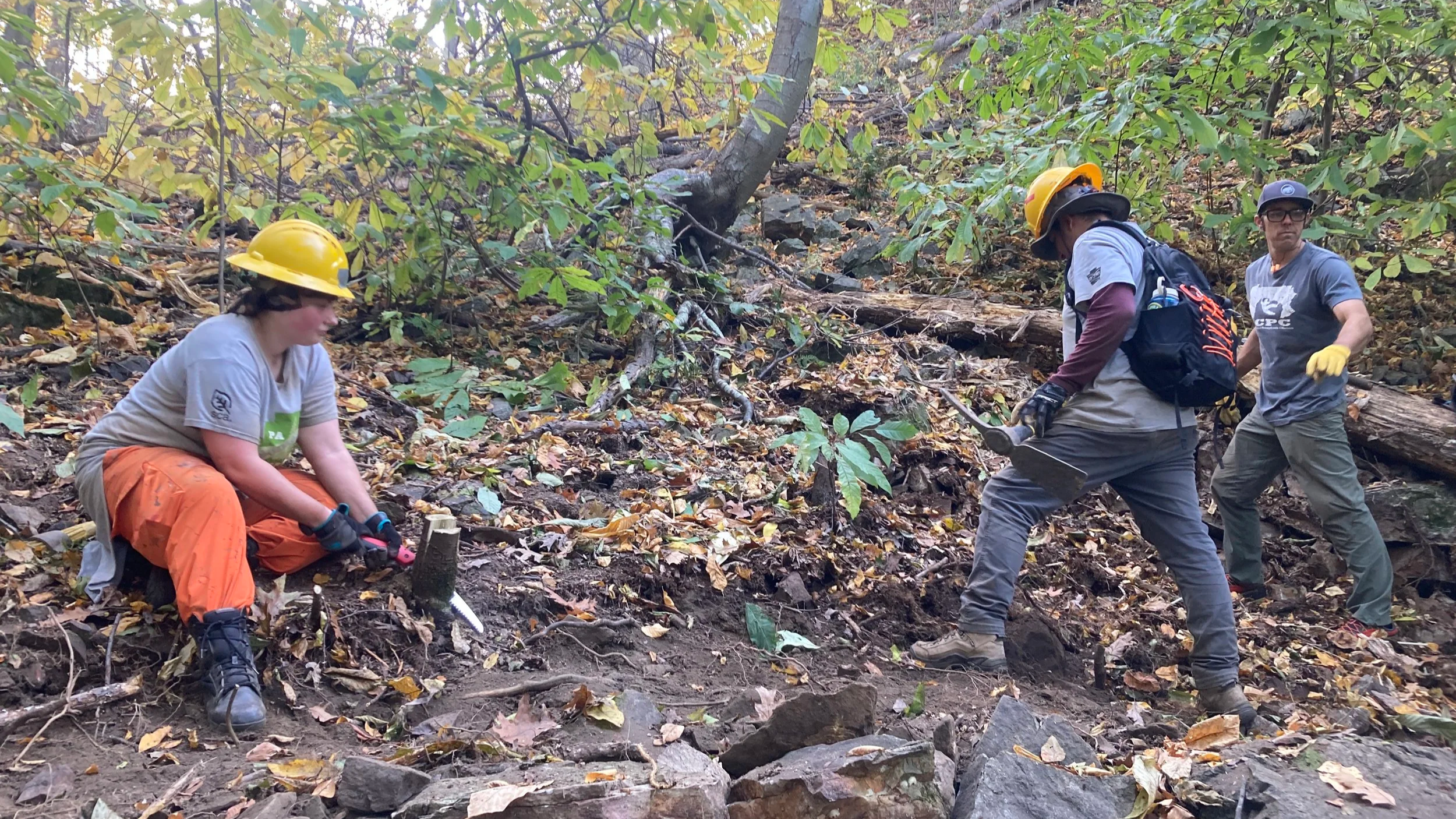
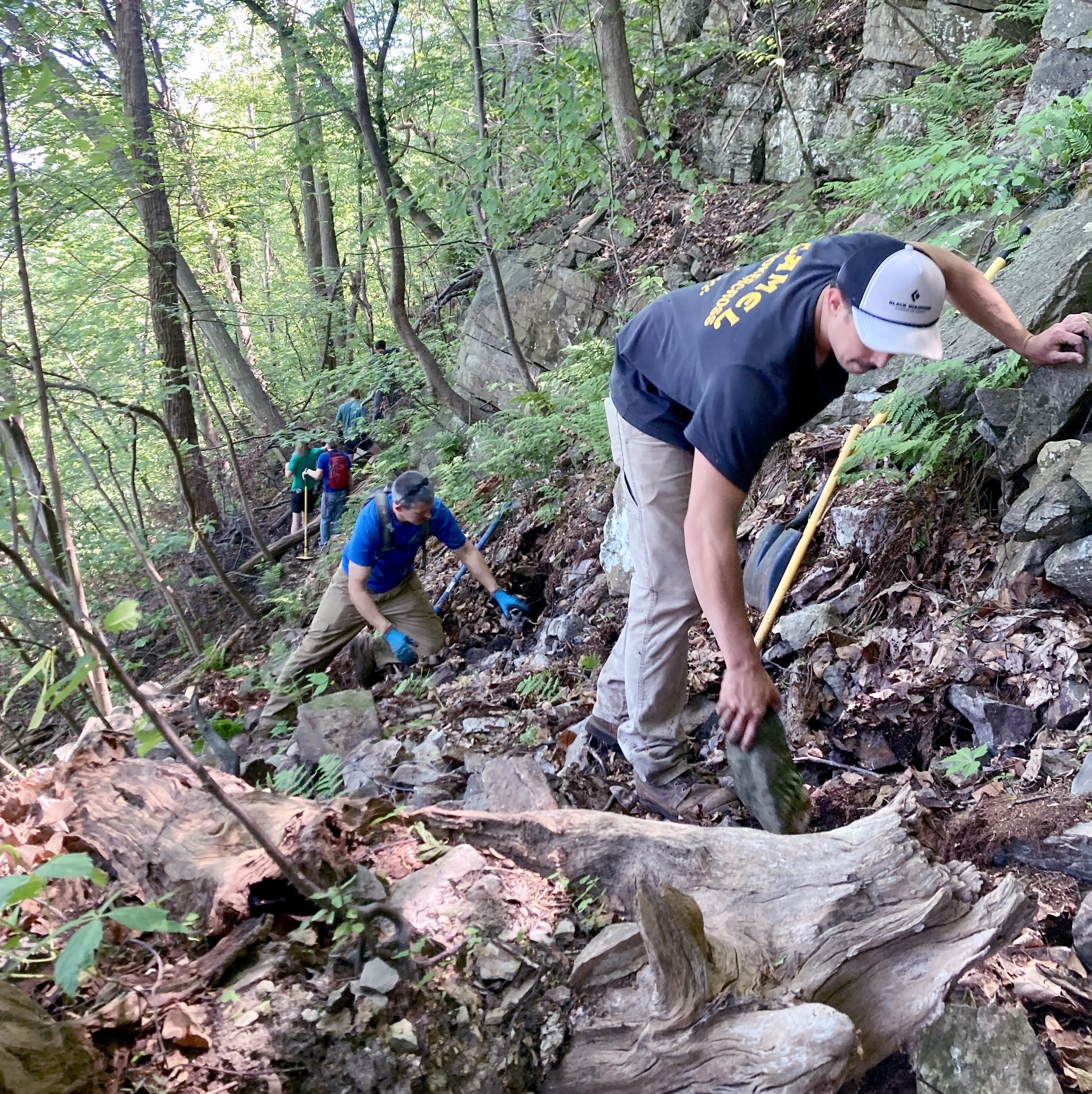
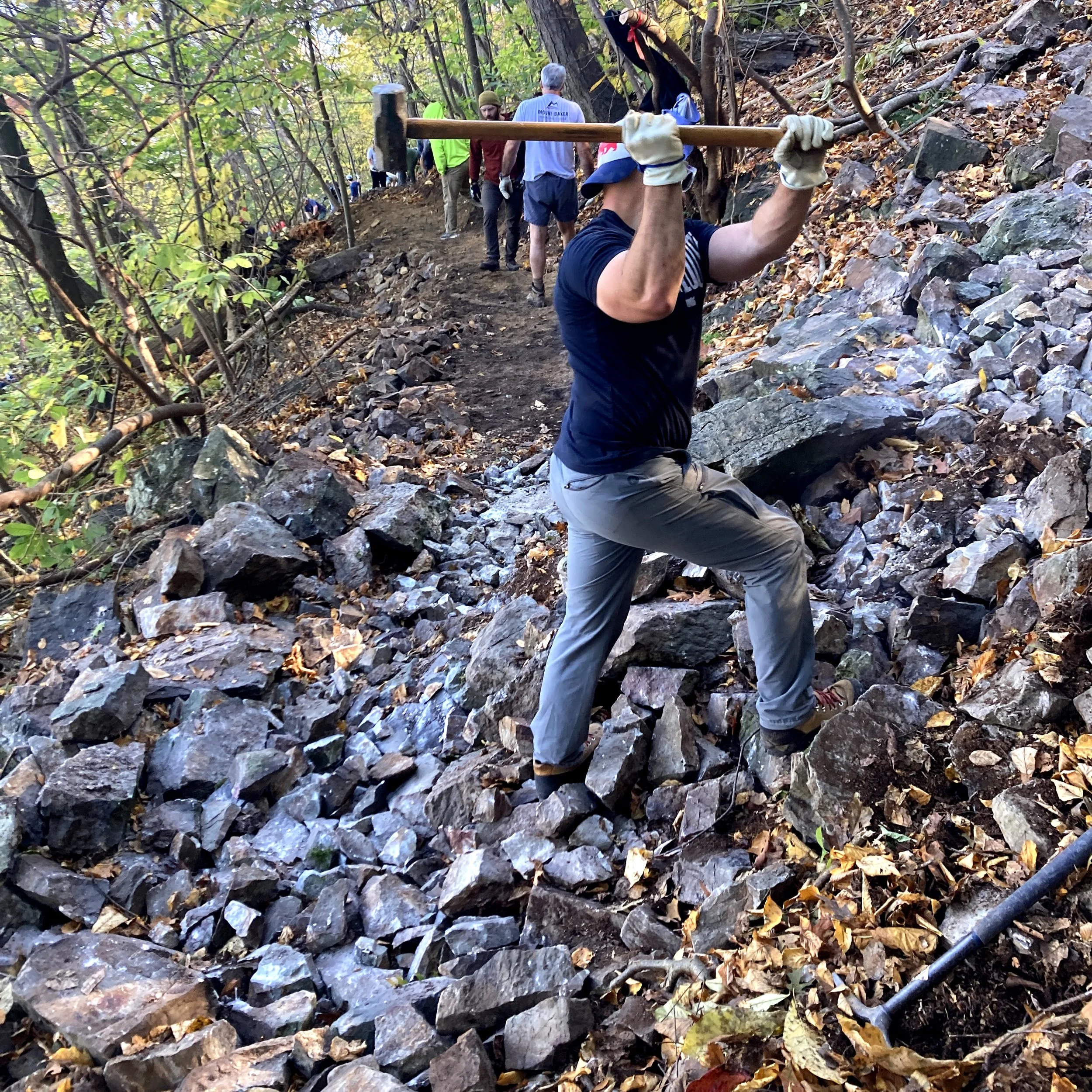
SCPC volunteers established a contoured access trail at Susquehanna Riverlands State Park, with guidance from the Access Fund Conservation Team and help from Pennsylvania DCNR Outdoor Corps.
Additional design strategies
Out-sloped tread:
This practice encourages sheet flow of runoff at low velocities, away from the trail, rather than down the trail.
A trail's grade (percent slope) should not be any greater than half the grade of the hillside that it contours along. For example, if the slope of the hill the trail runs along is 16%, then the grade of any part of the trail should be no more than 8%.
Half-Rule:
Grade reversals & switchbacks:
Are used in combination with out-sloped tread
Are constructed with smooth grade transitions
Take advantage of natural dips in the terrain
Create an up-and-down, rolling hill effect.
Are built into terrain.
Beyond trails
Climbing sites in general can be made more sustainable by providing sufficient parking, reinforcing belay and pad areas, and installing wayfinding signage.
Implementing these practices relies on strong partnerships between SCPC, the climbing community, and land managers.
SCPC helps to bridge the usage/maintenance gap by organizing volunteer trail days and providing outreach and education.
By doing so we can assure more direct stewardship of local climbing areas and ensure their resilience for decades to come.
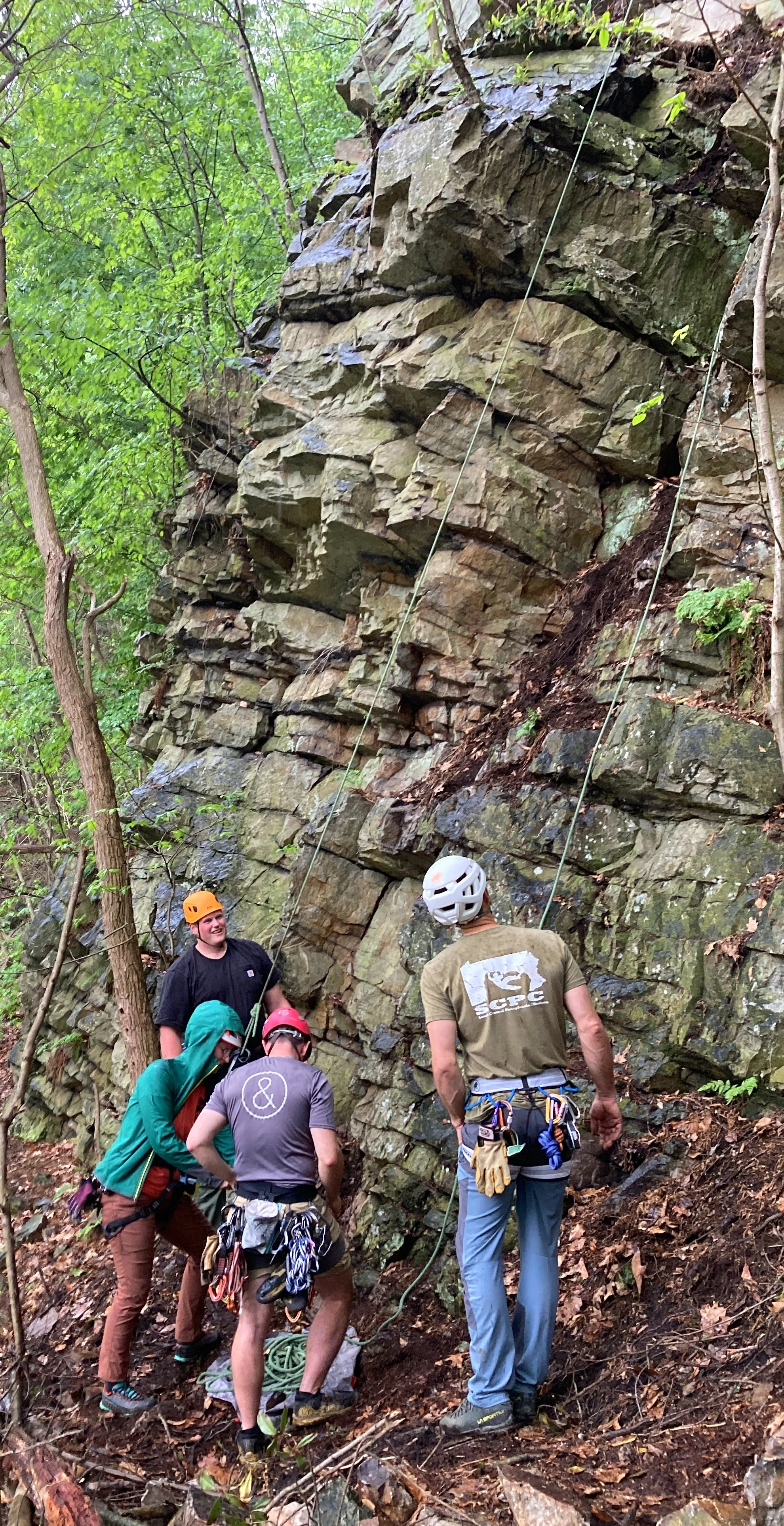
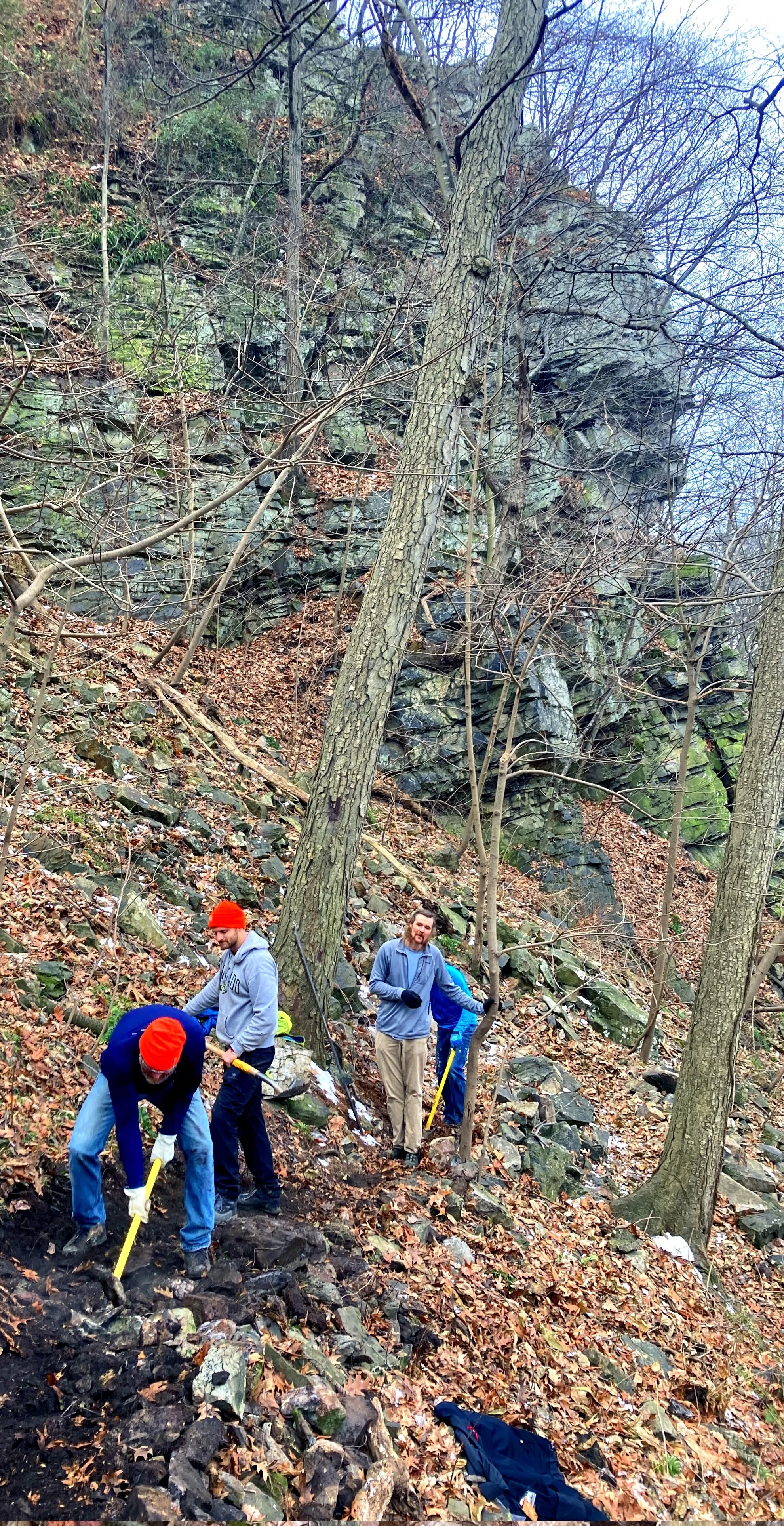
Want to volunteer at an SCPC trail day? Check out our page here for upcoming events:
Volunteer Opportunities — South Central Pennsylvania Climbers